
Why You’re Building Income Wrong (And How a Simple System Fixes It)
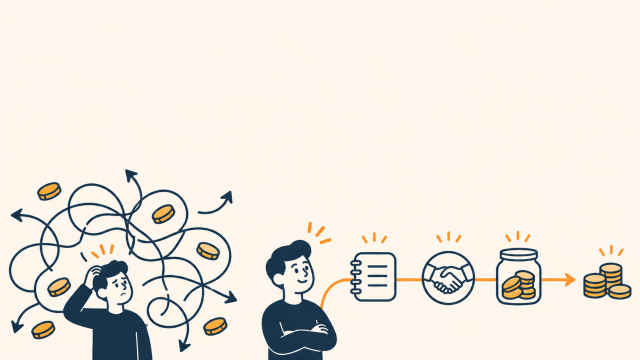
You are probably building income in the wrong order. Not morally wrong. Not criminally wrong. But in a way that burns out most people before they see money.
I know because I did it for five years.
Key Takeaways
- Most people start by learning the skill before they have a channel to sell it through, which delays first income by months or years.
- The order matters: pick the channel first (eCommerce, freelance services, or content), then build the skill, then sell—in that sequence.
- Your first job is to prove there is a buyer for what you are selling before you invest significant time in perfecting it.
- A simple decision tree can cut your setup time from months to weeks and get you to first sale faster than “just learning more.”
The Order You Are Probably Using
Here is what I see most often. Someone decides they want to build income online. They spend three months learning Shopify. They spend two months on email marketing. They watch courses on copywriting. They study Facebook ads. Then, eight months later, they have a store nobody knows about.
Or they decide to freelance. They take a course on web design. They learn Figma. They build a portfolio. Six months in, they have skills but zero clients.
Or they want to create content. They learn about YouTube algorithms, thumbnails, editing software, SEO. Nine months later they have uploaded five videos to an audience of 47 people (mostly family members who felt obligated).
The mistake is the same in each case: you are starting with the tool or the skill instead of starting with the market.
I did this. In 2015 and 2016 I learned WordPress, CSS, how to set up an email list, funnel strategy, landing page design. I was so prepared. I was also broke, frustrated, and completely stuck because I had no customers to use any of it on.
The learning felt productive. Each course gave me another checkbox. Each skill felt like progress. But progress toward what? I had built a technical foundation with no market to sell to.
The Right Order (The One That Actually Works)
The order that matters is this:
- Pick a sales channel.
- Validate there is a buyer for what you want to sell.
- Build or learn what you need to serve that buyer.
- Sell.
That is not the order that sounds impressive. It is the order that produces income.
Let me walk you through what this looks like in real action.
The eCommerce Version
You want to sell physical products. Channel: eCommerce.
Step one is not “learn Shopify.” Step one is: can you find a product that people will buy at a price where you can make money?
You spend a week looking. You find a niche—say, dog owners who have anxious dogs. You look at Amazon, Etsy, TikTok. You see that people are already buying calming treats for anxious dogs. You see the price point. You see people asking for better options in the comments.
There is a buyer. You have not yet learned anything special. You have just done five hours of searching.
Now you pick a supplier. You message three manufacturers or wholesalers. You find one that can make a small batch cheaply enough that you can sell it at the price the market is already paying.
Now step three: you learn Shopify. You learn how to set up a store. You learn how to take payments and ship. You learn this not in a vacuum but in service of one specific goal: getting this one product in front of the right buyers.
Step four: you sell. You spend £50 on a Facebook ad to test whether someone will actually buy. Someone does. You have proven the model works before you have invested serious time or money.
This whole sequence: two weeks from idea to first sale.
What you did not do: spend three months perfecting your Shopify store. Did not create a complex funnel. Did not wait until you “really understood Facebook ads.” You sold first, learned as you went.
The Freelance Services Version
You want to offer services. Channel: freelance work.
Step one is not “become world-class at your skill.” Step one is: are there actual people looking to pay for this right now?
You go to Upwork or Fiverr or a Facebook group for business owners. You look for requests. You type in a keyword: “social media management.” Hundreds of jobs. People are posting right now looking for help managing their Instagram. They are offering money for it.
There is a buyer.
You are probably not the best social media manager on the planet. That does not matter. Someone out there needs help worse than they need perfection. Your job is to find them.
Now step two: you message five people. You say, “I manage social media for small businesses. What is your biggest headache right now?” Two people reply. One hires you. You charge £200 to manage their Instagram for a month.
Now step three: you learn what you actually need to know to do that job well. You spend time on their account. You watch some YouTube on Instagram algorithms if you get stuck. You deliver real results.
Step four is already underway: you are selling.
You did not spend two months mastering Instagram analytics first. You learned it while doing it for a client who was paying you.
Timeline to first paid work: one week.
The Content Creation Version
You want to build an audience and eventually monetize through content. Channel: content.
Step one is not “learn the algorithm.” Step one is: what do people actually want to read or watch right now?
You go to Reddit. You find a subreddit about your topic. You read through the questions people ask. You find a pattern: people asking the same thing ten times a week because the answer is not clear anywhere.
There is a buyer (or future audience member).
You write one post answering that question in plain English. You do not wait until you have learned copywriting formulas. You just answer the question clearly. You post it on LinkedIn or in a Medium publication or as a YouTube Short.
People read it. Three people say “yes, this helped.” One person asks if you offer services. You have a lead without a full content strategy.
Now you start doing this twice a week. You are learning what works. You build an audience of 500 people in three months, not by mastering thumbnails but by writing about what people actually ask you about.
Timeline to meaningful engagement: one week. Timeline to actual business opportunities from the audience: two months.
Why This Order Matters (And Why You Probably Know This Already)
The reason this order works is economics. You are reversing the risk.
When you learn first, then try to sell, you are betting that what you learned is what the market wants. It usually is not.
When you validate first, then learn, you are betting that the market knows what it wants. It does.
I spent months learning Facebook ads before I had a product to sell. I learned it wrong because I was learning in the abstract. I did not understand split testing because I had no conversions to test. I did not understand audience targeting because I had no customer to describe.
When I later had to learn Facebook ads for a real product I was trying to sell, I learned it in three days because every lesson was tied to something I was actually doing.
The second version of learning was compressed because it was motivated. The first version was sprawling because it was hypothetical.
The Decision Tree That Saves You Months
You do not need much to start. You need a decision tree.
Here is the one that works:
Question one: Do you have at least £200-£500 to invest?
If yes, eCommerce is your channel. You can source a small batch of a product and test it. You need: a supplier, a store (Shopify or similar), and advertising money. You can have first sales in two to four weeks.
If no, move to question two.
Question two: Do you have any skill people will pay for right now?
This does not mean you are expert-level. It means you can do something faster or better than someone who needs it. Writing. Design. Admin work. Teaching. Video editing. Social media management.
If yes, freelance services is your channel. You can have first paid work in one to two weeks. You start by finding clients who need help, not by building a portfolio or getting certified.
If no, move to question three.
Question three: Do you have time to show up consistently?
Thirty minutes a day, four days a week, for the next three months?
If yes, content creation is your channel. You build an audience by solving problems people are searching for right now. You do not wait for the algorithm to notice you; you find communities where the problem already exists and contribute there. First income (from audience or from leads generated) in three to six months.
If no, you probably do not have time to build side income right now. This is honest feedback, not a failure. Come back when you do.
That is it. Three questions. Each leads to a specific channel. Each channel has a different path to first money.
What You Do In Week One
Stop learning for a moment. Do this instead.
If you chose eCommerce: find five products in a category you know something about. Check if people are buying them on Amazon, Etsy, Shopify. Message one supplier and ask about minimum order quantity and price. That is your week one.
If you chose freelance services: write down five tasks you can do. Post on two freelance platforms saying you offer one of them. Message five people in a relevant Facebook group. That is your week one.
If you chose content: find three communities (Reddit, Facebook group, LinkedIn) where your topic is discussed. Write and post one piece of content that answers a question you see asked. Share it where the question was asked. That is your week one.
None of this requires advanced knowledge. All of it requires action.
You will probably feel unprepared. That feeling is not a signal to learn more. That feeling is your system telling you it is time to work with incomplete information. Everyone starts there.
The Learning Happens After
Once you have a customer or a lead or an audience member who engaged with you, learning becomes useful.
You learn how to improve what did not work. You learn the features of your platform because you have a reason to use them. You learn from feedback because it is tied to something real, not a video course.
This is not lazy learning. It is efficient learning. It is learning at the speed of actual business, not at the speed of course completion.
When I finally had a freelance client to manage social media for, I learned more about Instagram in two weeks than I had in two months of watching tutorials. Why? Because I had stakes. I had a client watching. I had a result I needed to deliver. Learning went from intellectual exercise to professional necessity.
That is the difference. One is learning about building income. The other is learning while building income.
You already know this works in other areas. You did not read a manual before you learned to ride a bike. You got on the bike and fell and got up and learned. You did not study the theory of cooking before making your first meal. You tried to make something and burned it and adjusted and learned.
Income building works the same way. The only difference is that somewhere online, someone sold you the idea that you need to be ready first. You do not.
Why This Order Changes Everything
When you reverse the order—channel first, validation second, learning third, selling fourth—several things happen.
First, you get to the first money mark in weeks instead of months. That money is not usually life-changing. But it proves the model works. It proves someone will pay. It turns abstract theory into concrete fact.
Second, your motivation changes. You are no longer learning in the void. You are learning because you have a customer waiting or you are close to one. That focus is worth months of generic study.
Third, you stop chasing the perfect business idea and start with the viable one. You do not wait for inspiration to strike. You do not wait until you have found the one true niche that will make you rich. You pick a channel, find a buyer, and start.
Fourth, you build momentum. First sale gives you confidence. Second sale proves it was not a fluke. By the fifth sale, you are not asking yourself if this will work anymore. You are asking how to scale it.
Most people never get to five sales because they quit at month three or month six when the learning stage has been long and the results have been invisible. You do not have this problem if your first results come in week two.
The Specific Blocks People Hit (And How to Get Past Them)
You will hit resistance. Everyone does. Here is what it looks like and how to move through it.
Block one: “I am not ready yet.”
You are never ready. The people who sell the most started with the worst skills. They got good by doing, not by waiting to be good first. When you feel not ready, you are actually feeling the right thing—you are about to do something real. Push through.
Block two: “What if I pick the wrong channel?”
You probably will. That is fine. You will find out in two weeks instead of two years. The cost of learning you picked wrong early is cheap. The cost of learning you picked wrong after six months of learning is high. Wrong channel early is actually a win because you can pivot fast.
Block three: “I need to do more research first.”
You need to do more doing first. Research is hiding. You learn more in one real conversation with a potential customer than in ten hours of market research. Talk to people. See if they care. Then adjust.
Block four: “This is too simple. There must be more to it.”
There is. But the more happens after you start, not before. You will discover complexity when it is relevant. Right now, you just need to pick a channel and validate it. That is genuinely all you need to do this week.
Frequently Asked Questions
Do I have to pick just one channel to start?
Yes. Your time is limited. Splitting your focus between eCommerce, freelance services, and content creation means you will do all three at 30 percent instead of one at 100 percent. Pick one, get to first money, then test a second channel if you want to. Most people find one channel works well enough that they do not need to branch out.
What if my first choice does not work?
Then you switch to your second choice using what you learned from the first one. You do this in week three or four, not month six. Because you tested fast, you still have plenty of runway to find what works. This is cheaper and faster than trying to force the first thing to work because you invested months in learning it.
Is it bad to take a course on my channel before I start?
Not bad. But unnecessary. A short course (three hours maximum) can help you understand the basics so you do not waste time on obvious mistakes. Anything longer than that is learning instead of doing. Take the short course, then start. Do not take the course and then take another course waiting to feel ready.
How much money do I actually need to start?
For eCommerce, £200-£500 to test a product. For freelance services, zero—you are selling time and skill. For content, zero—you are building with platforms that do not charge you. You can start the channel you can afford to start right now.
The Next Step
You probably know which channel fits your situation. eCommerce if you have budget. Freelance services if you have a skill. Content if you have time. Your job this week is not to plan perfectly. It is to take one small action in the direction of your channel. Find a product. Message a potential client. Write one post. The planning has already happened. Now you move.
If you want a framework to make this decision clearer and avoid the common stuck points that trap most people, find out more.
